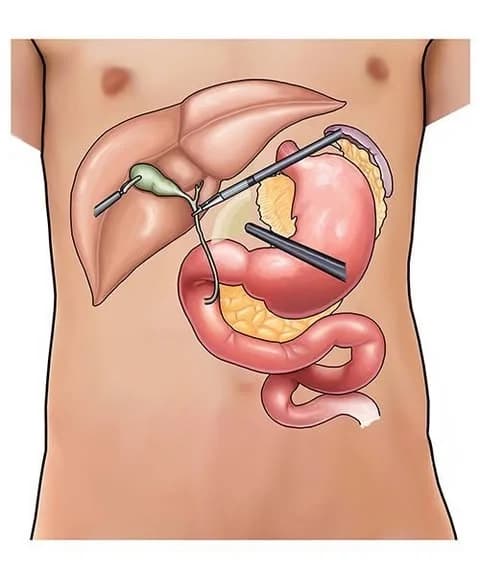
Laparoscopic Cholecystectomy
Surgical treatment of pathologies associated with the gallbladder
Problems It Solves
Functional and mechanical problems of the gallbladder
Detailed description:
What is laparoscopic cholecystectomy?
Laparoscopic cholecystectomy is an operation during which the gallbladder is removed. The gallbladder is a small organ located below the liver that collects bile — a fluid involved in digestion.
When is the operation performed?
Laparoscopic cholecystectomy is recommended for conditions such as:
- Gallstones
- Acute or chronic cholecystitis
- Pain in the right hypochondrium
- Digestive disorders
- Functional problems of the gallbladder
- Risk of complications of the bile ducts
How is laparoscopic surgery performed?
The operation is performed under general anesthesia.
The surgeon makes several small incisions on the abdominal wall, through which a special camera — a laparoscope — and surgical instruments are inserted. The camera transmits a high-quality image to a screen, which allows the operation to be performed safely and accurately.
After this, the gallbladder is separated and removed from the body through a small incision.
Advantages of the laparoscopic method:
- Less pain after the operation
- Small scars
- Low risk of infection
- Rapid rehabilitation
- Short hospital stay
- Quick return to daily activities
What changes after gallbladder removal?
Without the gallbladder, the body continues to function normally. Bile passes directly from the liver into the intestine, and the digestion process continues.
Laparoscopic cholecystectomy is a safe and effective operation that significantly reduces pain, inflammation, and the risk of developing complications in the future.